
Our Programs
At the Kanesatake Health Center, our programs are rooted in respect, community, and cultural values. From primary care to mental wellness, each service is designed to meet the unique needs of our community members while honoring the traditions and strengths of our community. We believe in holistic, client and family centered care that promotes healing, dignity, and long-term wellness.
Our Programs








Culturally-Adapted Client &
Family-Centered Care Approach
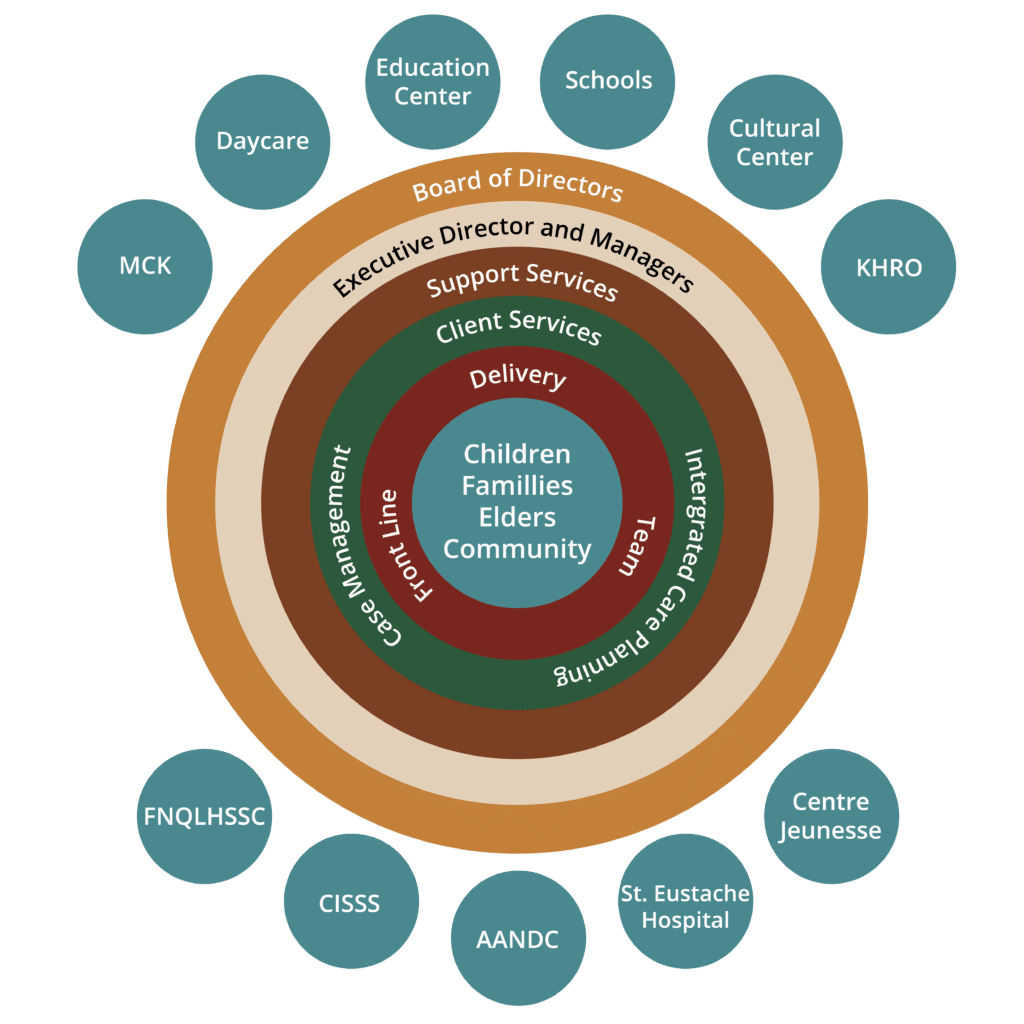

SUPPORT SERVICES: Operations & Administration—Communication, Community Based Drinking Water Monitoring, Operations & Maintenance, Information Management Systems, Human Resources, Finance

CLIENT SERVICES: Mental Health & Wellness, CFS (Child & Family Services), Primary Care, Home Care, Kaniatarak’ta
Riverside Elders Home, Assisted Living Program

Primary Care
Primary Care refers to first-contact care, in which the majority of health problems are identified. Primary Care services and service providers are responsible for the diagnostic, curative, restorative and supportive elements required for holistic and comprehensive client-centered care. This would include appropriate referrals when needed.
The Primary Care clinic offers services which cover a range of clinical assessments, interventions and evaluations as well as psychosocial support and monitoring of chronic illnesses and mental health & addictions issues as required. These may include the various screening initiatives such as diabetic retinopathy and sleep apnea screening. The Kanesatake Health Center Inc. offers medical and nurse clinics through the year with visiting specialists as needed.

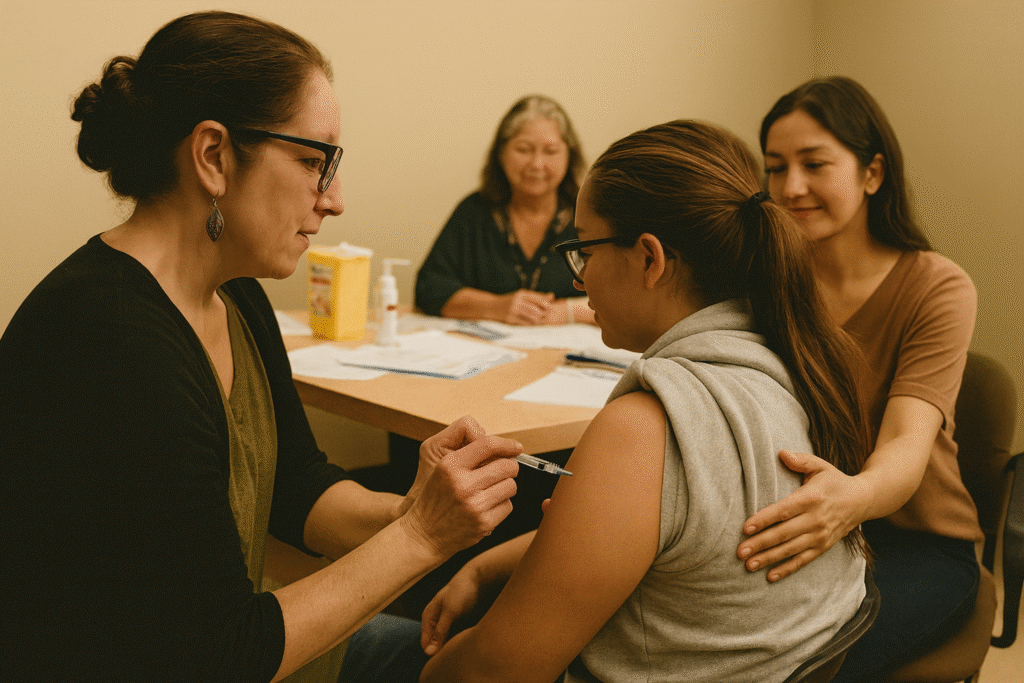
At this time, The Kanesatake Health Center Inc. continues to collaborate with local, provincial and federal partners to address the primary care needs of individuals, families and the community through the following services:
Medical Services
- Ambulatory Clinic
- Home & Community Care
- Communicable Disease Prevention & Tuberculosis Monitoring
- Immunizations
- Sexually transmitted and blood borne illnesses (STBBIs)
- Infection Prevention and Control
- Aboriginal Diabetes Initiative (ADI)

Mental Health and Wellness

Mental Health was identified in the community needs assessment as the priority in The Kanesatake Health Center Inc. five-year health plan (2015-2020) and is implemented by the Health Center’s inter-collaborative mental health team including Child & Family Services, Home & Community Care, Primary Care Services and external collaborators providing promotion, prevention and direct services, such as drug and alcohol referals.
The Kanesatake Health Center Inc. Mental Health Program provides a wide range of specialized culturally adapted and family centered approach programs and services tailored to the needs of community members.
Assisted Living Program
Documents for more Information :

Program Description and Objective
The Assisted Living Program is an income dependent residency-based program that provides funding for non-medical social support services to seniors, adults with chronic illness, and Children and adults with disabilities (mental and physical) so that they can maintain functional independence and greater self-reliance.
Institutional Care
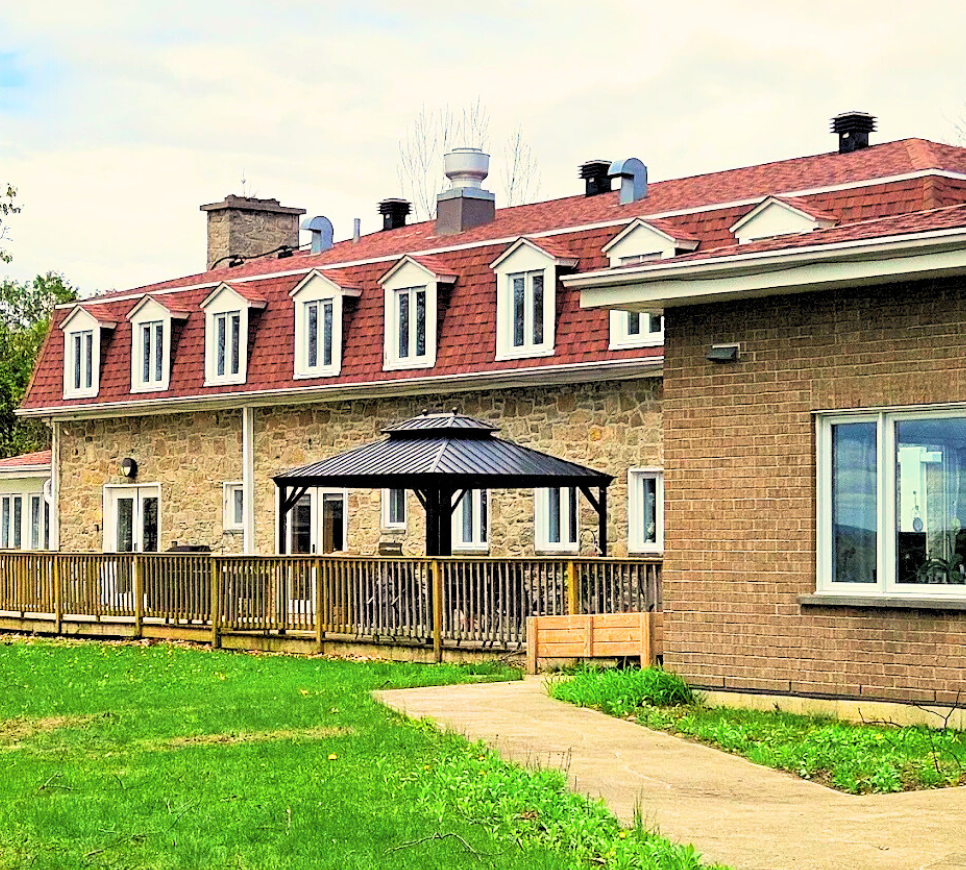
Under INAC, the “Assisted Living Program” provides supervision and care in a family-like setting for people who are unable to live on their own due to physical or psychological limitations, but do not need constant medical care.
To obtain more information on the Institutional Care Program contact: Joyce Bonspiel Nelson, Kaniatarak’ta Riverside Elders Home Manager at (450) 479-6000.
The transfer of Riverside Elders Home on December 22, 2016 to The Kanesatake Health Center Inc. provides a continuum of quality safe care to our Elders and the disabled.
In-Home Support
On October 1, 2016, the In-Home Support program was transferred from Centre de Jeunesse de laurentides to the Kanesatake Health Center Inc. The In-Home Support program is funded by Indian and Northern Affairs of Canada (INAC) for First Nations to provide social support services to clients who require some type of assistance with their in home daily activities.
To obtain more information on the In-Home Support Program contact: Gloria Nelson, In-Home Support Manager at (450) 479-6000 Ext: 222.
There are three components available through the Assisted Living Program. All three program components respond to three distinct and progressively intensive care needs:in-home care (e.g. meal programs, housekeeping)adult foster care (e.g. care in a group home setting)institutional care (e.g. care provided in provincially licensed residential facilities)
INAC funds the Assisted Living Program supporting and servicing clients who meet the eligibility criteria and living on reserve.
Clients
In-home care, adult foster care and institutional care Clients must be:
- Ordinarily resident on reserve;
- Formally assessed by a designated social service or health professional using the care assessment criteria recognized by INAC as requiring one or more eligible supports;
- Unable to pay for the assessed services themselves (in accordance with the requirements);
- In the case of in-home care, there are no individuals living in the household or there are no family members living within the community who can provide the services.
Ordinarily resident on reserve means that a client has, at the time of applying for a care assessment, demonstrated that he or she:
- lives on reserve and does not maintain a primary residence off reserve.

Child and Family Support Program
The Kanesatake Health Center Inc. Child & Family Support Program works as part of an inter-collaborative team with The Kanesatake Health Center Inc. Mental Health and Nursing Services that focus on three areas of activities:
- Promotion
- Prevention
- Intervention

These areas of activities aim to support children, youth and their families with innovative support programs and services that are culturally appropriate, inclusive and non-judgmental. We strive to be consistent with the community values of love, respect and honesty so we can ensure that community members receive family services that are:
- Equitably accessible to children, youth and their families;
- Guided by best practices;
- Fact based and respect the assessed needs of the community;
- Transparent and respect individual and family confidentiality with the highest priority
The department will continue to link with other community service providers, including external services, for the purpose of providing the necessary resources. This will inspire youth and families in their personal growth towards self-empowerment, stability and continuity for the next 7 generations.
The Child & Family Support Program consists of the following programs:
Healthy Child Developement
- Learn & Play
- Parents & Tots
- Kid Zone
- Prenatal
- Maternal Child Health
- Breastfeeding Support
- Childrens Oral Health Initiative
- Parenting Program
- Head Start
- Injury Prevention
Family Support Services
- Family Support Services
- Paddling Club
- Community Events
- Culture Programming
- Kanesatake Youth of Today Program (KYOT)
- Child & Youth Supporting Activities
- Youth Support

Baby Friendly Initiative
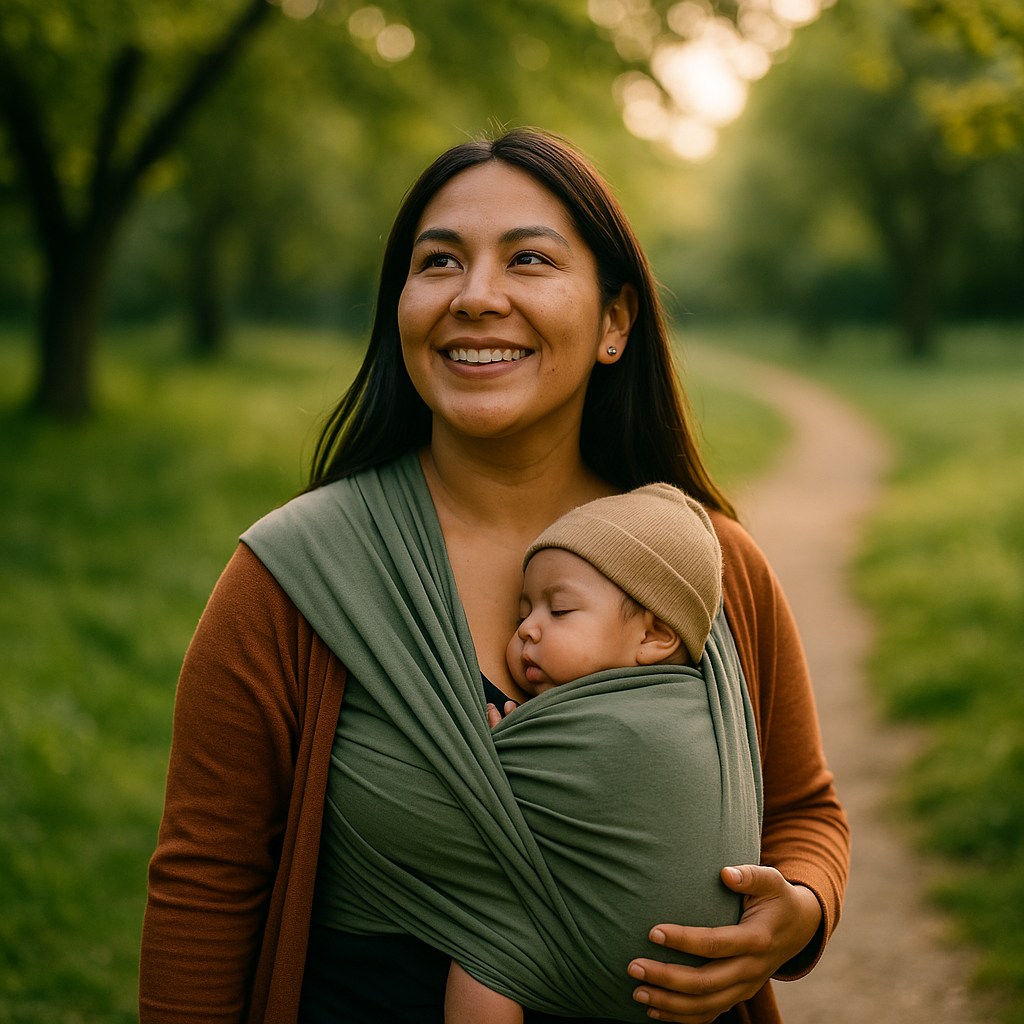
The Baby Friendly Program is an award-winning initiative which offers breastfeeding knowledge and support for all pregnant women and their families. The team includes Maternal Child Health Nurse, Family Support Workers, and Baby Friendly Coordinator. Introduction to the Baby Friendly team and peer support mothers is made during the pre-natal visits (classes). Referrals to Baby Friendly can be made by any of the MCH Team or other health staff. The program offers various information sessions throughout the year that highlight the many benefits of breastfeeding.
Brochures to download:
Our breastfeeding initiation rates continue to be outstanding and mothers feel supported in their decision to initiate and continue breastfeeding. The average duration for mothers breastfeeding 12 to 18 months in 2014-16 was 51% compared to 36% in 2011-13! Kanesatake continues to strengthen its breastfeeding culture. This is encouraging as KHC approaches its 5-year re-assessment in Fall 2018 for the WHO Baby Friendly Initiative re-accreditation.
KHC participated in the annual WABA World Breastfeeding week with interoffice activities to promote and educate staff regarding breastfeeding. Three informative breastfeeding articles were written in Karihwi:ios, The KHC community publication.
2017/18 saw the completion and publication of Laying the Foundation for a Healthy Community – An Intergenerational Breastfeeding Support Guide and Tool Kit. A 2 & 1/2 day Train the Trainer event was given by the Kanesatake BFI team to 50 workers (including nurses, dieticians, family support workers) representing 20 First Nations communities from Quebec and Labrador. The Health Canada representatives that attended gave high praise for the Guide and Kits that they helped to fund and offered to support us in its dissemination to other First Nations communities in Canada.
This year due to the high percentage of numbers of mothers who had previously attended Intergenerational Breastfeeding Support Gatherings, an Intergenerational Siblings Class was developed and offered for the first time. In addition to preparing older siblings for the changes a new baby brings, an emphasis continued to be on the importance of the support of the extended family and friends in the transition after birth.
To obtain more information on the Baby Friendly Initiative contact: Karen Macinnes, MCH Nurse at (450) 479-6000 Ext: 237.

Community-Based Drinking Water Monitoring Program
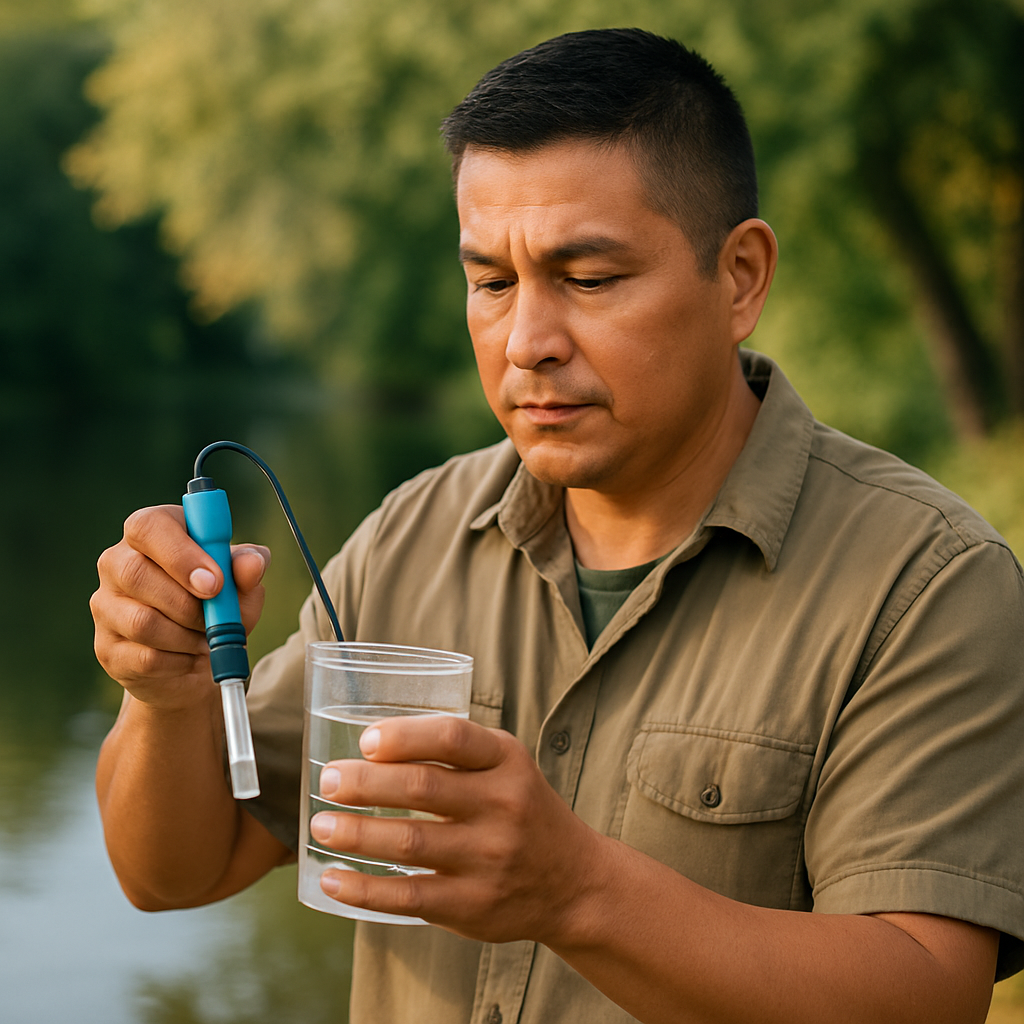
The Community-Based Drinking Water Monitoring Program aims to raise awareness of environmental health hazards regarding water, food and vector borne illnesses, including health problems associated with indoor air quality. The program identifies and defines health risks, monitors environmental conditions and their risks and supports activities in the following areas:
- Drinking water and sewage
- Food safety
- Facilities health inspections
- West Nile Virus
The Community-Based Drinking Water Monitor is a liason between community members and Health Canada.
Report to download:

Non-Insured Health Benefits (NIHB) Program

Medical Transportation Program Documents:
The NIHB program provides a range of health benefits to meet medical needs not covered by provincial, territorial or other third party health plans. Third party health plans are those usually provided by insurance companies, the benefits and services of the NIHB Program are in addition to provincial and territorial insured health care programs.
The Kanesatake Medical Transportation Program (KMTP) follows the criteria’s set forth by Health Canada’s Non Insured Health Benefits Policy Framework. The KMTP follows the Quebec Highway Safety Code and its regulations. The KMTP follows the obligations from the Commission des Transport du Quebec for the operation of heavy vehicle users.
Some of the benefits provided are under the categories of:
- Vision Care
- Medical Supplies and Equipment
- Drug Benefits
- Medical Transportation
- Mental Health
- Dental Care
- Orthodontics
The liaison for NIHB at the Health Center Inc. is the Medical Transportation Coordinator. She also coordinates medical needs with Medi Gas, CEO Medic, as well as dentists, denturologists and opticians as required by clients.
Medical Transportation
The Kanesatake Health Center Inc. Medical Transpotation Program provides transportation for eligible registerd First Nations and recognized Inuit (clients) to access medically required health services not provided in the community of residence. Medical transportation benefits may be provided to access the following types of medically necessary health services:
- Medical services defined as insured services by provincial/territorial health plans RAMQ-Medicare Card (e.g. Appointments with physician, hospital care);
- Diagnostic tests and medical treatments ordered by a physician or other health professional within his or her scope of practice and which are covered by RAMQ-Medicare Card;
- Publically-funded alcohol, solvent, drug abuse and detox treatment;
- Non-Insured Health Benefits (Vision Care, Dental Care/Orthodontics, Mental Health, Medical Supplies and Equipment).
All medical appointments must be processed and authorized a minimum of 48 hours in advance by the Medical Transportation Coordinator at the Kanesatake Health Center Inc. PRIOR to the date of the medical appointment.
The Kanesatake Health Center Inc. vans are for medical transportation services only and will not be utilized as a taxi service.
Stay Connected
Contact
2 Só:se O’nahsakèn:rat Kanesatake, QC, J0N 1E0
Monday to Friday
8:00 AM to 4:00 PM